Education & Learning
Latest Reviews
Education & Learning
Teacher Response Protocols for Students Who Refuse to Remove Headphones in Class
The modern classroom is a battlefield of distractions, and perhaps none is more persistent than the use of headphones. For many students, music or podcasts serve as a digital sanctuary, making the request to "unplug" feel like a personal affront. When a student refuses to remove their headphones, it is rarely just about the music; it is often a test of authority or a coping mechanism for anxiety and overstimulation. Teachers must approach this situation with a blend of empathy and firm boundary-setting. Addressing these distractions is not merely about maintaining silence; it is about preparing students for formal environments where focus is non-negotiable.De-escalation Techniques for Initial ConfrontationThe first moment of refusal is critical. If a teacher reacts with anger or public shaming, the student is likely to dig in their heels, leading to a disruptive power struggle. Instead, the protocol should begin with a low-profile intervention. Walking toward the student’s desk and using a non-verbal cue—like pointing to your own ear—gives the student a chance to comply without losing face in front of their peers. If this fails, a quiet, private conversation is the next step. Explain that the policy exists to ensure they don't miss vital instructions or collaborative opportunities.Establishing Clear and Consistent Classroom PoliciesConsistency is the enemy of non-compliance. Students are far more likely to resist a rule if they perceive it as being enforced sporadically or unfairly. At the beginning of the semester, teachers should establish "Green, Yellow, and Red" zones for headphone use. For example, independent work might be a Green zone where headphones are permitted, while direct instruction is a Red zone. When these boundaries are crossed, the protocol must be predictable. Clear consequences, such as the temporary storage of the device in a "phone hotel," should be communicated early on. Teachers who have a background in an invigilator course are often better equipped to design these protocols, as they understand the importance of standardized rules and the psychological impact of consistent monitoring on participant behavior.Exploring the Underlying Causes of ResistanceBefore moving to punitive measures, it is worth investigating why a student is so attached to their headphones. In some cases, students with neurodivergence or sensory processing issues use noise-canceling headphones to manage the chaotic soundscape of a busy school. If a student claims they "need" the headphones to focus, the teacher should involve the school’s support staff to see if an official accommodation is appropriate. However, the teacher must also distinguish between a legitimate need and a habit of avoidance. The Connection Between Classroom Focus and Academic IntegrityThe refusal to remove headphones isn't just a nuisance; it is a potential threat to academic integrity. In an era where smart technology is becoming increasingly covert, headphones can be used to receive outside assistance or listen to pre-recorded notes during assessments. This is why strict headphone bans are a staple of formal examinations. Educators must help students understand that learning to work without digital crutches is part of their professional development. By maintaining high standards for a distraction-free environment, teachers are essentially proctoring their own classrooms. This mindset is deeply rooted in the principles taught in a comprehensive invigilator course, which emphasizes that a controlled environment is the only way to truly measure a student's individual progress and ensure that no one has an unfair advantage.Implementing Long-Term Solutions and Professional GrowthFinally, the goal of any protocol regarding headphones should be to foster a culture of mutual respect and professional readiness. Teachers should regularly reflect on their management styles and seek out professional development opportunities that enhance their supervisory skills. Whether it is through peer observation or specialized training, improving one's ability to command a room is vital for long-term success in education.
Education & Learning
Learn AR/VR Technology Through Real XR Development
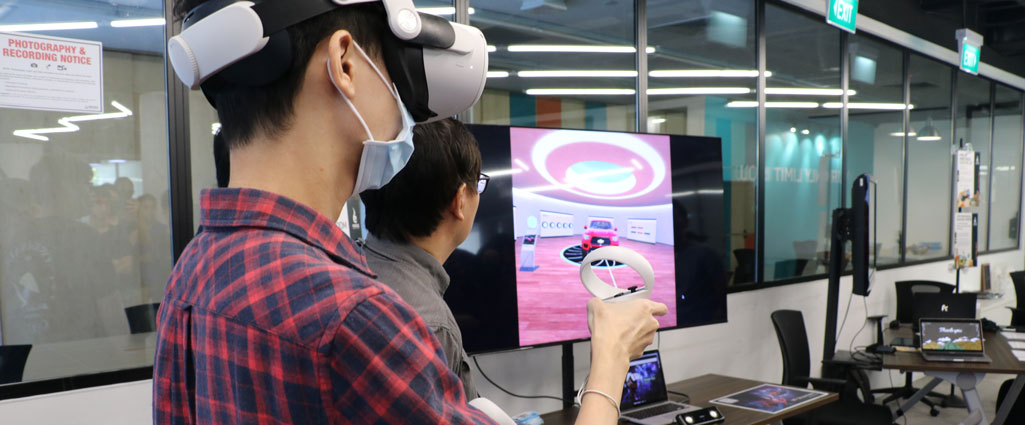
Digital experiences are no longer limited to screens; they’re becoming immersive, interactive, and deeply engaging. At the center of this shift is XR Development, a space where augmented reality, virtual reality, and mixed reality come together to reshape how people interact with content.From virtual showrooms to interactive training simulations, XR is changing how industries communicate, educate, and innovate. It’s not just about technology, it’s about creating experiences that feel real.To understand where this shift is heading, it helps to explore how XR Development is actively shaping digital experiences today. From enhancing customer journeys to building fully immersive environments, the impact is already visible across sectors like retail, healthcare, gaming, and education.If you’re considering stepping into this field, the next logical step is to learn AR/VR technology in a structured and practical way.Here’s what learning AR/VR typically involves:Understanding how immersive environments are designedWorking with tools like Unity and XR development frameworksBuilding interactive 3D experiencesLearning how users engage within virtual and augmented spacesThe demand for these skills is growing as businesses move toward more experience-driven engagement. Static content is being replaced with interactive storytelling and XR is leading that transformation.For learners who want to go beyond theory, structured programs offer a clear advantage. The MAGES Institute provides a pathway to learn AR/VR technology through hands-on training, where creativity and technical skills come together.A focused learning experience helps you:Create real-world AR and VR applications.Understand how immersive products are developed from concept to execution.Build a portfolio that reflects practical expertise.Gain confidence working on industry-relevant projects.Another important aspect of XR learning is adaptability. This field continues to evolve, and the ability to experiment, build, and iterate becomes just as important as technical knowledge. Structured learning environments help you develop this mindset early.Choosing to learn AR/VR technology is not just about acquiring a new skill—it’s about preparing for a future where digital and physical worlds blend seamlessly.Ready to explore XR Development and start building immersive experiences of your own? Contact us today.